
Marketing
T-Shirt Success: The Best Shopify Stores to Copy and Learn From
Jun 2, 2026
Why the Best Shopify T-Shirt Stores Are Worth Studying
The best Shopify t-shirt stores aren't just selling fabric and ink — they're building communities, movements, and in some cases, genuinely impressive businesses from a single great idea.
Here's a quick look at some of the top Shopify t-shirt stores worth knowing about:
Store | Niche | What Sets Them Apart |
|---|---|---|
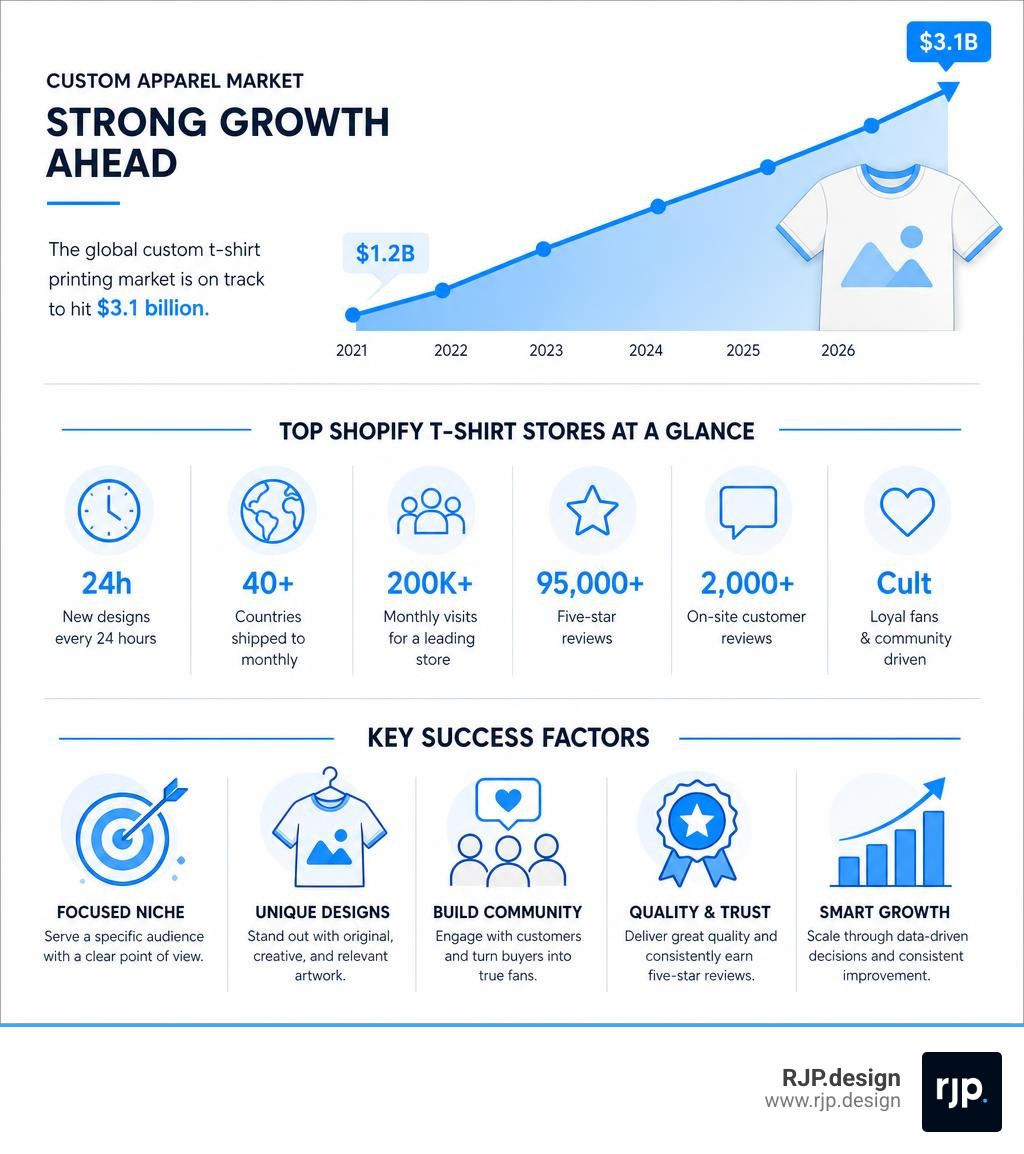
TeeFury | Pop culture / limited edition | New designs every 24 hours; 358k+ monthly visitors |
Shelfies | Quirky all-over prints | Ships to 40+ countries monthly |
Underground Printing | Custom / bulk orders | 200k+ monthly visits; started in a college dorm |
Love in Faith Clothing | Faith-based apparel | 95,000+ five-star reviews |
Shirtwascash | Bold, weird graphic tees | Nearly 2,000 on-site customer reviews |
Johnny Cupcakes | Limited-edition lifestyle | Cult following; fans have tattooed the logo |
The global custom t-shirt printing market is on track to hit $3.1 billion — and that number tells a clear story. There has never been a better time to study what's working, borrow the best ideas, and build something of your own.
Whether you're a small business owner looking to add a merch line, or an aspiring entrepreneur ready to go all-in on apparel, the stores on this list offer real, actionable lessons — not just pretty screenshots.
I'm Ross Plumer, a digital marketing and ecommerce specialist with experience helping businesses generate over $20 million in revenue, and I've spent considerable time analyzing what separates the best Shopify t-shirt stores from the ones that quietly disappear. In the sections below, I'll break down exactly what you can learn from them — and how to apply it.
Inside the Best Shopify T-Shirt Stores of 2026

The best Shopify t-shirt brands usually win because they are specific. They do not try to sell “cool shirts for everyone.” They sell dog-parent jokes, faith-based apparel, bold political graphics, sneaker-matching tees, artist-driven drops, or hyper-local humor.
That focus makes everything easier:
Product design becomes clearer.
Ads speak to a real person.
Product pages feel more personal.
Social content has a built-in audience.
Customers understand the brand in seconds.
If you are researching the best Shopify t-shirt stores, do not just look at the shirts. Look at the system behind them: niche, offer, design style, product page, checkout, shipping, reviews, and repeat-purchase strategy.
What Makes the Best Shopify T-Shirt Stores Successful?
The strongest stores tend to share a few patterns.
1. They create urgency
TeeFury is one of the clearest examples. Its limited-edition model, with designs changing frequently, gives shoppers a reason to buy now instead of “thinking about it” forever. That fear of missing out works especially well for pop culture and fandom designs.
2. They build around identity
Love in Faith Clothing shows how powerful values-based branding can be. With more than 95,000 five-star reviews referenced in industry research, the lesson is obvious: people buy shirts that say something about who they are.
3. They make customization simple
Underground Printing attracts more than 200k monthly visits, helped by clear custom-order tools and a practical buying experience. Custom t-shirts can get complicated quickly, so stores that simplify sizing, artwork, quantities, and delivery timelines have an advantage.
4. They make marketing part of the product
A funny shirt is not just clothing. It is content. Great t-shirt brands design products that customers want to photograph, share, gift, and talk about.
That is why paid traffic can work well when the offer is clear. If you are planning ads, our Ecommerce PPC Management Complete Guide is a useful place to start before spending money on clicks.
Top Shopify T-Shirt Stores to Emulate
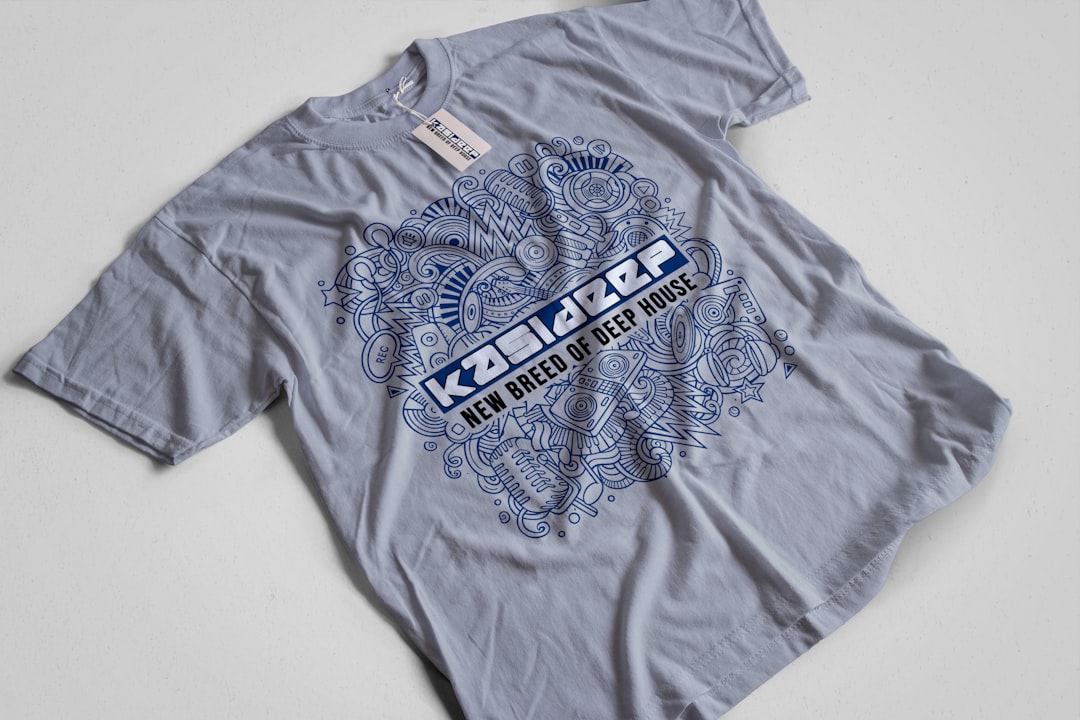
Here are t-shirt stores and product examples worth studying for inspiration.
1. TeeFury
TeeFury is a classic example of limited-edition selling. The main lesson is urgency. When products are time-sensitive, customers have a clear reason to act.
Copy the strategy, not the artwork: daily drops, artist collaborations, voting, themed launches, and email reminders.
2. Shelfies
Shelfies built attention through quirky all-over prints and a playful brand voice. It has shipped to more than 40 countries each month, which shows how niche humor can travel globally when the designs are distinctive enough.
Lesson: weird can scale, if it is memorable.
3. Underground Printing
Underground Printing is less about one design style and more about service. The store proves that custom apparel can win through clear tools, reliable fulfillment, and customer support.
Lesson: if your product requires decisions, reduce friction everywhere.
4. Love in Faith Clothing
This is a strong example of values-led apparel. The designs connect with a specific belief-driven audience, and the customer review volume shows how community can become a moat.
Lesson: shared values can be stronger than trend-chasing.
5. Queso Tees
Queso Tees leans into Texas humor, regional personality, and casual language. It also highlights more responsible production practices, including printed-to-order production and sustainable manufacturing claims.
Lesson: local humor plus quality basics can feel much more original than generic “funny shirt” stores.
6. TRESR | Funny Graphic Tees for Nerds, Dog Parents, Teachers, and More
TRESR stands out because of its unusual AI-run positioning, transparent metrics, and niche humor. Its public-facing business experiment gives customers something to follow beyond the products.
Lesson: transparency can become a brand asset when it is honest and entertaining.
7. Fallen Vessel Tee – INTO THE AM
This product is a good example of bold artwork and polished product presentation. Graphic tees succeed when the art feels intentional, not like clipart slapped on cotton at midnight.
Lesson: strong visuals need strong product pages.
**8. Graphic T-Shirt — 'Mother F***** Jones' Bold Portrait Tee – SOUTH CITY DEGENERATES**
This product page includes helpful garment details such as fabric, fit, care instructions, and size availability. That matters because customers cannot touch the shirt before buying.
Lesson: product specs reduce hesitation.
9. I'm in love with my girlfriend don't talk to me she has a nuclear bomb shirt, Tees, Hoodie & Apparel
This is an example of absurd, internet-native humor. These shirts work when the phrase feels like something a specific online subculture would share.
Lesson: meme-like copy can sell, but only if it matches the audience.
10. Fuck Kanye Shirt
Provocative designs can attract attention quickly. They can also narrow your audience quickly. That is not always bad. Strong positioning often means some people will love it and others will leave.
Lesson: bold opinions are a brand choice, not a shortcut.
The Role of Print-on-Demand and Custom Manufacturing
Print-on-demand is one of the biggest reasons t-shirt businesses are easier to start in 2026 than they were years ago.
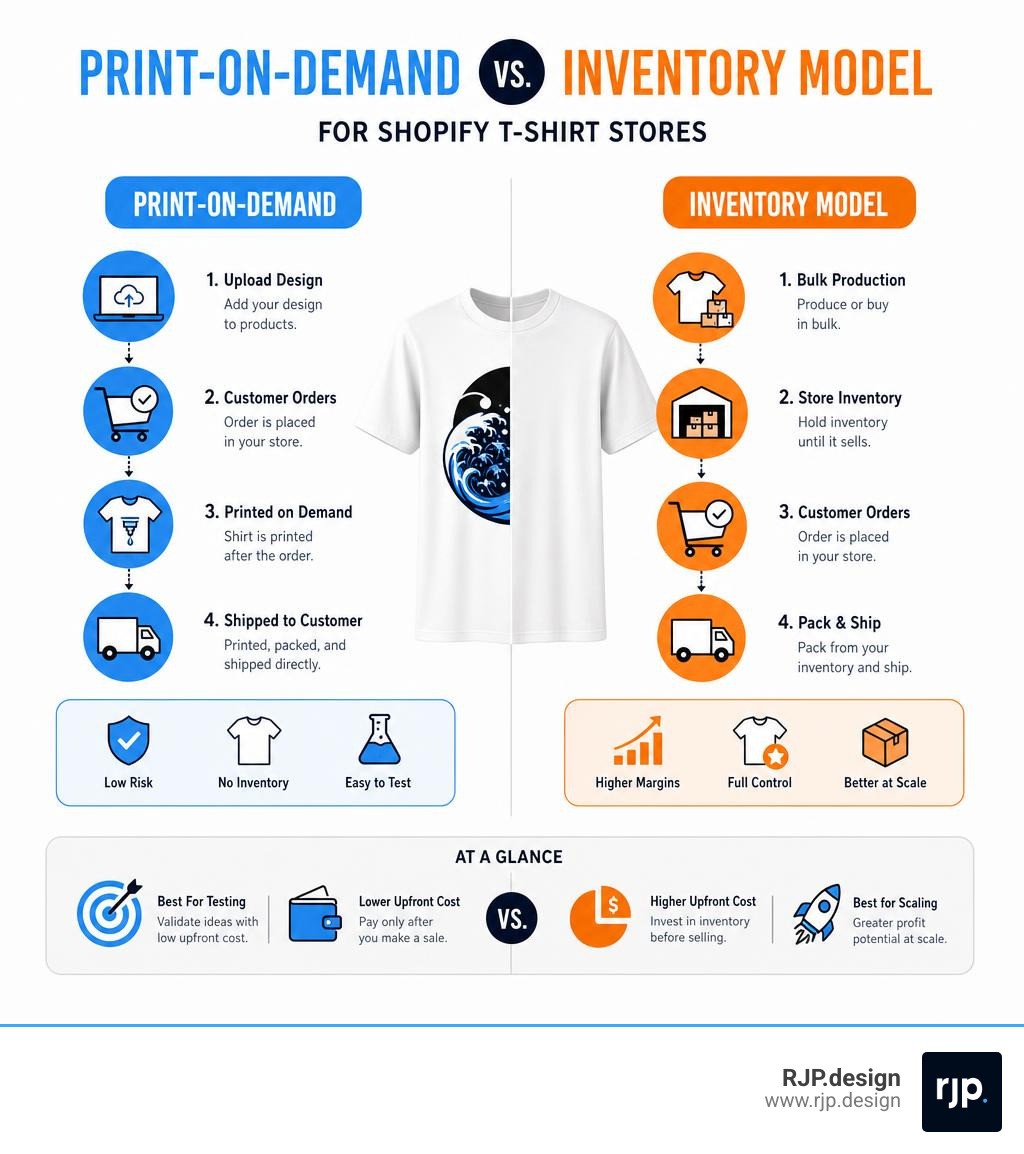
With print-on-demand, you can upload designs, connect products to Shopify, and produce each shirt after an order is placed. That reduces inventory risk because you are not buying 500 shirts before knowing whether anyone wants them.
Common production options include:
DTG printing: Great for detailed, full-color artwork.
DTF printing: Flexible and often useful for bold graphics.
Screen printing: Often better for larger batches.
Cut-and-sew manufacturing: More control, but higher complexity.
Printed-to-order production: Helps reduce unsold stock.
Print-on-demand is ideal for testing. Custom manufacturing is better when you have proven demand, want better margins at scale, or need unique fits, fabrics, labels, or packaging.
Shipping also becomes a serious part of the customer experience. Late packages can ruin even the funniest shirt. If fulfillment is part of your growth plan, read our guide to Ecommerce Shipping Integration.
How to Build and Scale Your Own T-Shirt Empire
You do not need to start with 100 designs. In fact, please do not. That is how founders end up with 97 unsold “limited editions” in their garage and a deep emotional connection to cardboard boxes.
Start small. Test quickly. Improve what works.
Key Strategies for Branding and Customer Experience
Here is what we recommend focusing on first.
Pick a niche with emotional energy
Good niches have identity built in. Examples include:
Dog breeds
Teachers
Faith communities
Local cities or states
Fitness subcultures
Music scenes
Political humor
Parenting jokes
Gaming and internet culture
Create a simple brand story
Customers should understand your store quickly:
Who is it for?
What kind of humor, art, or message do you sell?
Why should someone buy from you instead of a marketplace?
Use reviews and user-generated content
Customer photos are powerful because they prove the shirt looks good on real people. Encourage tagged photos, feature buyers on product pages, and ask for reviews after delivery.
Make policies clear
Flexible returns, sizing charts, shipping timelines, and washing instructions all reduce anxiety. A shirt may be simple, but online buying still requires trust.
Design for everyone who wants to buy
Accessibility matters. Clear contrast, readable text, keyboard-friendly navigation, descriptive alt text, and simple forms help more shoppers use your store. Our Ecommerce Accessibility Testing resource can help you find issues before customers do.
Technical Setup and Optimizing Your Store Design
A Shopify t-shirt store needs more than a logo and a “Buy Now” button.
At minimum, your store should include:
Fast mobile pages
Clear product categories
High-quality mockups or photos
Size charts
Product reviews
Simple navigation
Multiple payment options
Visible shipping and return policies
Email capture
Analytics and conversion tracking
Most t-shirt purchases happen on mobile, so design for thumbs first. Keep filters simple. Make product images easy to swipe. Keep checkout short.
If you need help building properly from the start, our Shopify Ecommerce Development Agency team can help turn a good idea into a store that is clean, fast, and built to convert.
You can also explore our guides on Ecommerce Website Design, how to Build Custom Ecommerce Site, and when it may be time for an Ecommerce Website Redesign Guide.
For bigger models, such as artist marketplaces or multi-seller apparel platforms, our Ecommerce Multi Vendor guide is worth reading. And if you are coordinating designers, developers, printers, and marketing teams, strong Ecommerce Website Project Management will save you a lot of stress.
Actionable Steps to Launch Your Store
Before you launch, decide how you want to fulfill orders.
Model | Best For | Pros | Cons |
|---|---|---|---|
Print-on-demand | Testing new designs | Low upfront cost, less inventory risk, easy to launch | Lower margins, less control over packaging and production |
Holding inventory | Proven bestsellers | Better margins, faster quality control, custom packaging | Higher upfront cost, storage needs, risk of unsold stock |
Hybrid | Growing stores | Test with POD, stock winners later | Requires more planning and tracking |
Here is a simple launch plan:
Choose one focused niche
Do not sell “funny shirts.” Sell funny shirts for dog moms, science teachers, Texas food lovers, or marathon runners with questionable life choices.
Create 3 to 5 test designs
Use a small batch of concepts to learn what people actually want.
Build a clean Shopify store
Keep the homepage simple: who it is for, bestsellers, clear categories, and a strong call to action.
Write useful product pages
Include fit, fabric, print method, care instructions, shipping times, and size guidance.
Set up email and social channels
T-shirt brands grow well through repeat drops, abandoned cart emails, launch announcements, and customer photos.
Test traffic
Use organic social, small ad tests, influencer gifting, email, and search. Track what converts.
Scale winners
When one design sells, build around it. Create related designs, bundles, colorways, and seasonal drops.
The best lesson from the best Shopify t-shirt stores is simple: do not copy their exact designs. Copy their discipline.
They know their audience. They make buying easy. They use strong visuals. They reduce risk with reviews and clear policies. They keep releasing fresh ideas. And they treat a t-shirt like a message people are proud to wear.
If you want to see how strong ecommerce design comes together, explore our guide to Best Shopify Store Designs. And if you are ready to build or improve your own t-shirt store, we would be glad to help you create something that looks great, works smoothly, and is easy for customers to find online.