
SEO
Mapping Success: How Local SEO Can Grow Your Franchise
Apr 20, 2026
Why Local SEO for Franchises Is the Growth Engine You Can't Ignore
Local SEO for franchises is the practice of optimizing each of your business locations to appear prominently in local search results — so that when someone nearby searches "HVAC repair near me" or "best burger in Austin," your location shows up, not a competitor's.
Here's a quick breakdown of what it involves:
Google Business Profile (GBP) optimization — claiming and managing a verified listing for every location
NAP consistency — keeping your Name, Address, and Phone number identical across every directory and platform
Location pages — dedicated, unique web pages for each franchise location with local content and keywords
Review management — generating, monitoring, and responding to customer reviews at scale
Citation building — getting listed accurately in local directories to reinforce your presence with search engines
The numbers make a compelling case on their own. Nearly 46% of all Google searches have local intent — meaning nearly half of everyone searching on Google is looking for something nearby. And 18% of those local searches result in a same-day purchase. For a franchise with multiple locations, that's an enormous pool of ready-to-buy customers being decided by whether or not you show up in the right place at the right time.
But here's where it gets complicated for franchises specifically.
A single-location business has one listing to manage, one page to optimize, one set of reviews to respond to. A franchise with 20, 50, or 200 locations? That's 200 Google Business Profiles, 200 sets of directory listings, and 200 opportunities for something to go wrong. One missed address update, one inconsistent phone number, one unclaimed duplicate listing — and Google quietly loses confidence in your data, quietly drops you from the Map Pack, and quietly sends your customers to a competitor.
That's not a hypothetical. A franchise owner who updates a suite number on Yelp but forgets to update it on Google can watch their location disappear from local search results by the weekend — resulting in a revenue drop that only gets noticed when Monday rolls around and the phones aren't ringing.
This guide is built to help you understand exactly how local SEO works across multiple locations, what the biggest pitfalls are, and how to build a system that scales.
I'm Ross Plumer, a digital marketing strategist at RJP.design with a background in helping businesses that have marketed over $20 million in revenue build stronger online presences. My work in local SEO for franchises draws on hands-on experience with multi-location brands where consistent visibility and scalable systems aren't a nice-to-have — they're the difference between growth and stagnation.
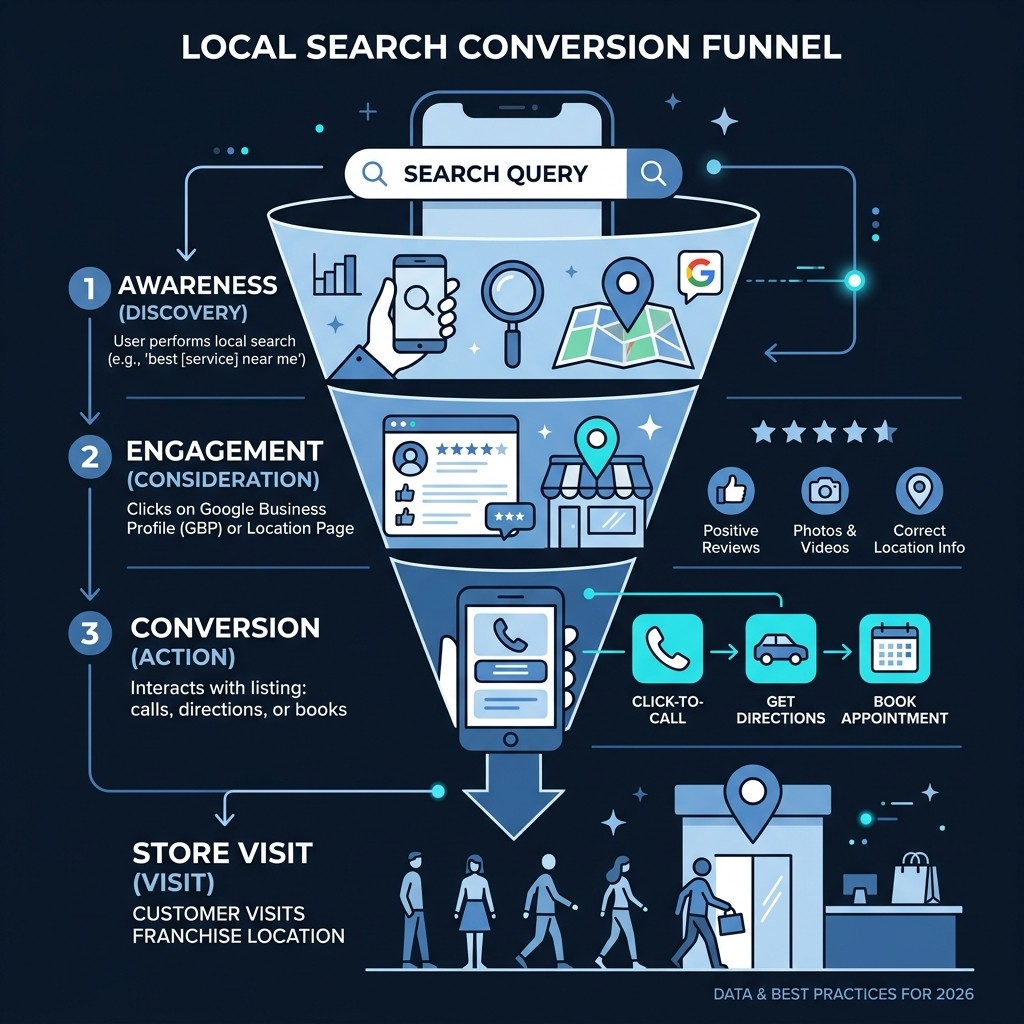
Simple guide to Local SEO for franchises terms:
The Core Pillars of Local SEO for Franchises
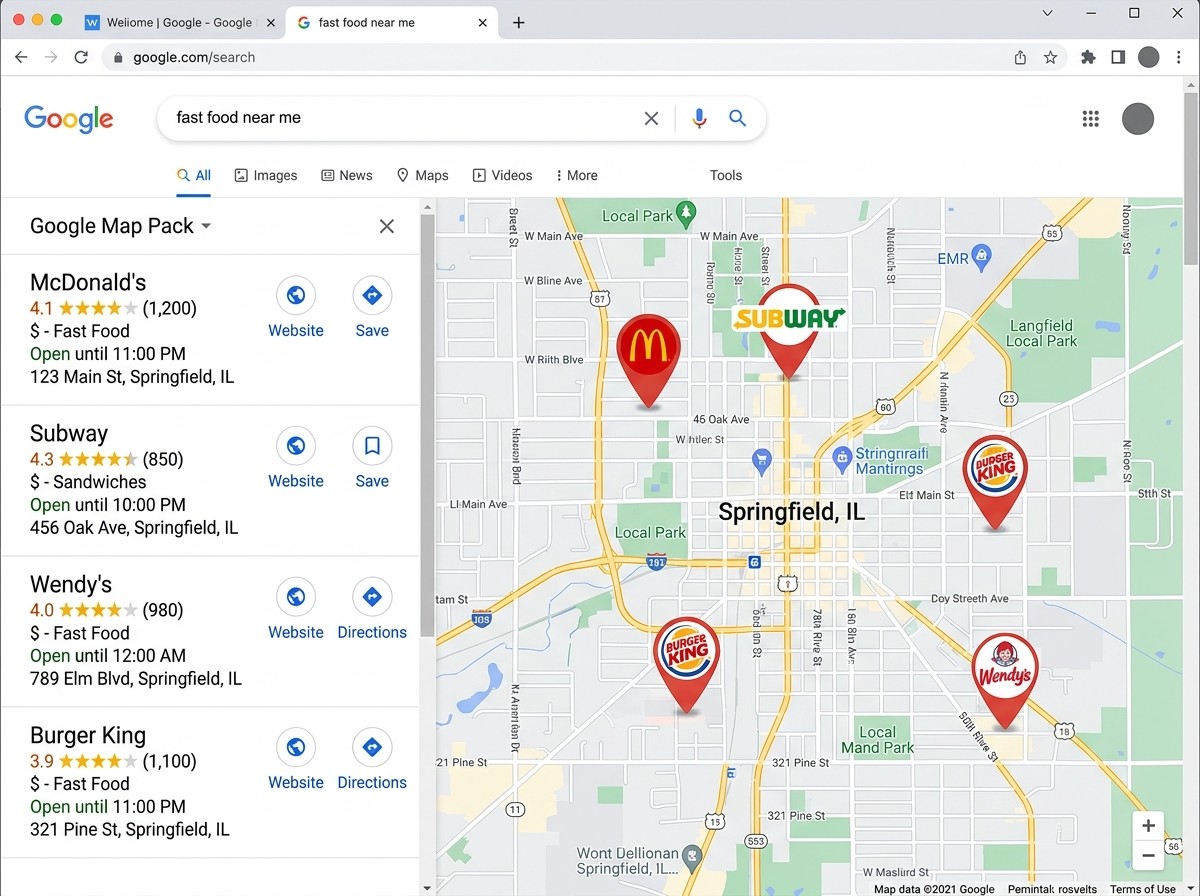
When we talk about the "Core Pillars," we are looking at the foundation of how Google decides who wins the local race. For a franchise, this isn't just about having a big national brand name; it’s about winning the "neighborhood" search. Google uses three main criteria to rank local businesses: Proximity (how close you are to the searcher), Relevance (how well your business matches the search query), and Prominence (how well-known and trusted your business is online).
For a multi-location strategy to work, we have to address how the website itself is built. One of the biggest debates in the franchise world is whether to use subfolders or subdomains. At RJP.design, we generally advocate for subfolders because they allow all your locations to benefit from the "authority" of your main brand domain.
Feature | Subfolder (yourbrand.com/denver) | Subdomain (denver.yourbrand.com) |
|---|---|---|
Domain Authority | Shared across all locations | Treated as a separate site |
Crawl Budget | More efficient | Can be fragmented |
Brand Consistency | High | Harder to maintain |
SEO Effort | Centralized | Multiplied per location |
Why Local SEO for Franchises is Essential in 2026
As we look toward 2026, the digital landscape is more competitive than ever. With nearly half of all searches having local intent, being invisible on the map is essentially like having a "Closed" sign on your door. Statistics show that 76% of mobile local searches result in a visit to a business within a day.
Furthermore, Google has moved toward a mobile-first indexing model. This means if your franchise location pages aren't optimized for a thumb-scrolling customer, you're losing out on high-intent queries. In 2026, the "Open Now" signal is more than just a label—it's a critical ranking factor. If your hours aren't synchronized perfectly across the web, Google may hesitate to show your business to a customer ready to buy right now. For more on staying ahead, check out our local SEO guide 2025.
Mastering Google Business Profile and the Map Pack
Your Google Business Profile (GBP) is arguably more important than your homepage for driving immediate foot traffic. It is the "front door" of your franchise. For multi-location brands, managing this at scale requires using Business Groups. This feature allows us to centralize control, making it easier to update holiday hours or post brand-wide promotions across 100+ profiles at once.
Bulk verification is another "must-have" for any franchise with more than 10 locations. Instead of waiting for 100 individual postcards in the mail, we can use Google's bulk verification process to claim the entire network. Once verified, the focus shifts to category optimization. Don't just pick "Restaurant"; be specific with "Italian Restaurant" or "Pizza Delivery" to ensure you match the right queries. For technical guidance, refer to Google Search: Managing Multi-Location Local Business Profiles and our own tips to optimize local listings.
Building High-Converting Location Pages
The "Find a Location" page on many franchise websites is often a "ghost town" of thin content. To rank, each location needs its own dedicated page. We're talking about more than just an address and a map. A high-converting location page should include:
Unique Local Content: Write 500-800 words about that specific neighborhood. Mention local landmarks, community events, or specific services offered at that branch.
Geo-targeted Keywords: Use terms like "Plumber in North Denver" rather than just "Plumber."
Localized CTAs: "Book an Appointment in Denver" feels more personal than a generic "Contact Us."
Schema Markup: This is the "hidden code" that tells search engines exactly where you are and what you do. Using LocalBusiness Schema helps Google understand the relationship between the parent brand and the local branch.
By following our guide to local city SEO, you can ensure each of your "spokes" is as strong as your "hub."
Scaling Success: Implementing a Multi-Location Strategy
Scaling Local SEO for franchises is about moving from manual tasks to automated systems. If you try to manage 50 locations using a spreadsheet and a prayer, you will fail. Success requires a governance model that balances corporate brand standards with franchisee local knowledge. Corporate should handle the technical structure and domain authority, while franchisees can be empowered to upload photos and respond to local reviews.
Managing NAP Consistency and Temporal Data
NAP stands for Name, Address, and Phone number. It sounds simple, but for a franchise, it is a minefield. Over time, "data drift" happens. A location moves across the street, a suite number changes, or a tracking phone number is implemented incorrectly. This creates "ghost locations"—old data that lingers online and confuses Google.
In 2026, we also have to worry about temporal data integrity. This refers to real-time information like "Current Wait Times" or "Holiday Hours." If a customer drives to your store because Google said you were open, only to find a locked door, you haven't just lost a sale—you've earned a one-star review. We recommend following NIST: Digital Identity and Listing Verification Standards to ensure your data is secure and verified. Consistent citations across the web act as "votes of confidence" for your business. You can learn more about the importance of local citations to see how they impact your Map Pack visibility.
Dominating with Review Velocity and Engagement
Reviews are the lifeblood of local search. Google doesn't just look at your average star rating; it looks at Review Velocity (how often you get new reviews) and Engagement (how often you respond to them).
A franchise with 500 reviews from three years ago will often be outranked by a competitor with 50 reviews from the last month. We encourage franchises to build an "automated flywheel" for reviews. This can be as simple as a QR code at the register or an automated SMS sent after a service call.
Responding to reviews is not optional. It shows both Google and potential customers that you are active and care about the "local" experience. For a deep dive into these tactics, see our local SEO best practices guide.
Future-Proofing Local SEO for Franchises with AI
The future of search is shifting from "Search Engine Optimization" to "Generative Engine Optimization" (GEO). With AI-driven search summaries, Google is now providing answers directly on the search results page. To stay relevant, franchises must use structured data and FAQ schema to ensure AI models can easily "digest" their information.
Automation is the only way to stay competitive at scale. From AI-driven review responses to automated NAP synchronization that resolves directory discrepancies 14x faster than manual teams, technology is the great equalizer. At RJP.design, we help franchises navigate these complex shifts by providing a down-to-earth team that focuses on your bottom line. We don't just want you to "look good" online; we want your phone to ring.
Ready to dominate the Map Pack? Schedule your local SEO services with us today and let’s start mapping your success.
Measuring What Matters: ROI for Multi-Location Brands
The ultimate question for any franchisor is: "Is this working?" When we manage Local SEO for franchises, we move beyond "vanity metrics" like keyword rankings and focus on "conversion metrics."
Direction Requests: How many people asked Google Maps how to get to your store?
Click-to-Call: How many people touched the "Call" button on their mobile phone?
Website Visits from GBP: Are people clicking through to your local landing pages?
Foot Traffic Attribution: Using mobile data to see if a search actually resulted in a physical visit.
Research shows that franchises using automated synchronization see an average 27% increase in direction requests within just 90 days. That is a direct link between SEO effort and store revenue.
Avoiding Common Franchise Pitfalls
Even the biggest brands make mistakes. Here are the "red flags" we look for during an audit:
Duplicate Content: Using the exact same "About Us" text on every location page. Google hates this. Each page needs its own "soul."
Self-Competition: If two of your locations are only two miles apart, they might be fighting for the same keywords. We solve this by targeting specific neighborhoods or "near me" mesh content.
Ignoring the "Long Tail": Don't just target "Gym." Target "Gym with childcare in [City Name]" or "24-hour fitness center [Neighborhood]."
Centralized Phone Numbers: Using a 1-800 number for every location kills your local signal. Use a local area code whenever possible.
Conclusion: The Path to Local Dominance
Local SEO for franchises is a marathon, not a sprint. It requires a blend of enterprise-level technical precision and neighborhood-level human touch. By focusing on the "Hub and Spoke" model—where the corporate site provides the authority and the location pages provide the relevance—you can create a digital presence that is impossible for competitors to ignore.
At RJP.design, we specialize in making this process simple. We take the complexity of NAP consistency, schema markup, and review velocity off your plate so you can focus on what you do best: running a successful franchise.
The Map Pack is waiting. Will your locations be there?
Ready to grow?