
Web
Everything You Need to Know About Retail Website Design
Feb 6, 2026
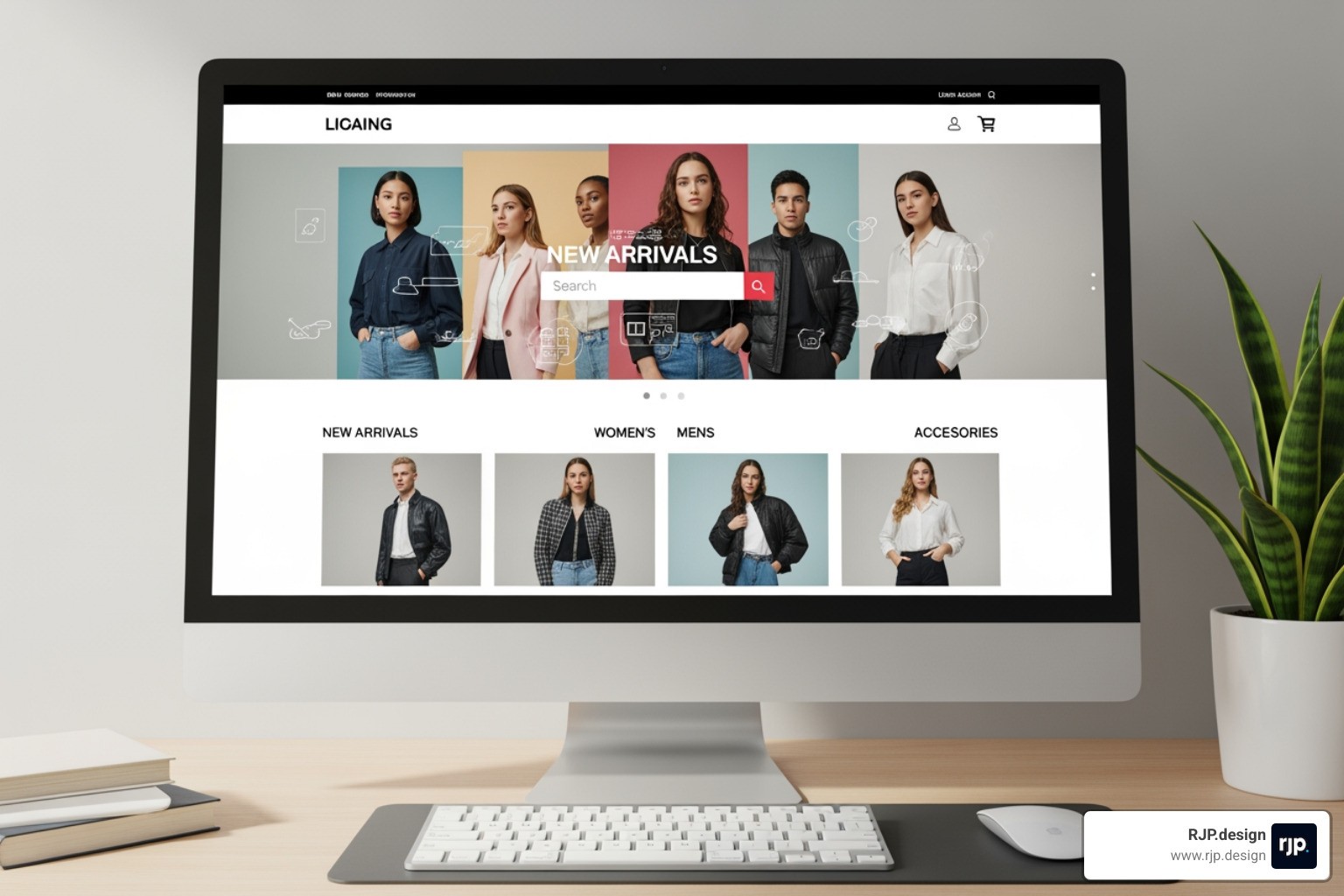
Why Retail Website Design Can Make or Break Your Business
Retail website design is the art and science of creating an online store that turns visitors into customers. It blends intuitive navigation, compelling visuals, and a seamless user experience to attract shoppers and build trust.
Key Elements of Winning Retail Website Design:
Speed: You have only 50 milliseconds to make a good first impression.
Mobile-First: 50% of e-commerce traffic comes from mobile devices.
Trust: SSL certificates, clear return policies, and customer reviews are essential.
Visuals: 94% of first impressions are design-related.
Checkout: A simple process can drastically reduce the 69% of carts that are abandoned.
Your website is your 24/7 salesperson. Research shows visitors judge your site's credibility in less than a second. If it's slow, confusing, or unprofessional, they'll leave and likely never return.
The stakes are even higher on mobile, where 53% of users abandon sites that take more than 3 seconds to load. With mobile retail sales projected to surpass $700 billion in the US by 2025, a poor mobile experience means leaving money on the table.
The good news? Effective design isn't about a huge budget. It's about understanding your customers and removing friction. I'm Ross Plumer, and I've helped businesses generate over $20 million in revenue through strategic design and marketing. My approach uses psychology and user research to build websites that don't just look good—they drive growth.

Retail website design terms you need:
The Blueprint for High-Converting Retail Website Design
A high-converting retail website design is a strategic experience that guides visitors from browsing to buying. It's a blend of aesthetics, function, and psychology that communicates your value and makes shopping effortless. Since 94% of first impressions are design-related, your site must look good and feel right.
Your design should immediately answer: "What do you sell, and why should I buy it?" For example, MVMT's sleek design reflects its "Style shouldn't break the bank" ethos.
Strategic design tools like color, typography, and visual hierarchy are crucial.
Color and Fonts: Colors set the mood, while limiting fonts to two complementary choices improves readability and professionalism.
Visual Hierarchy: Arrange elements to guide the user's eye to the most important information, like calls-to-action, using size, color, and placement.
For more information on how our team can help you define and express your brand through design, explore our branding and graphic design services.
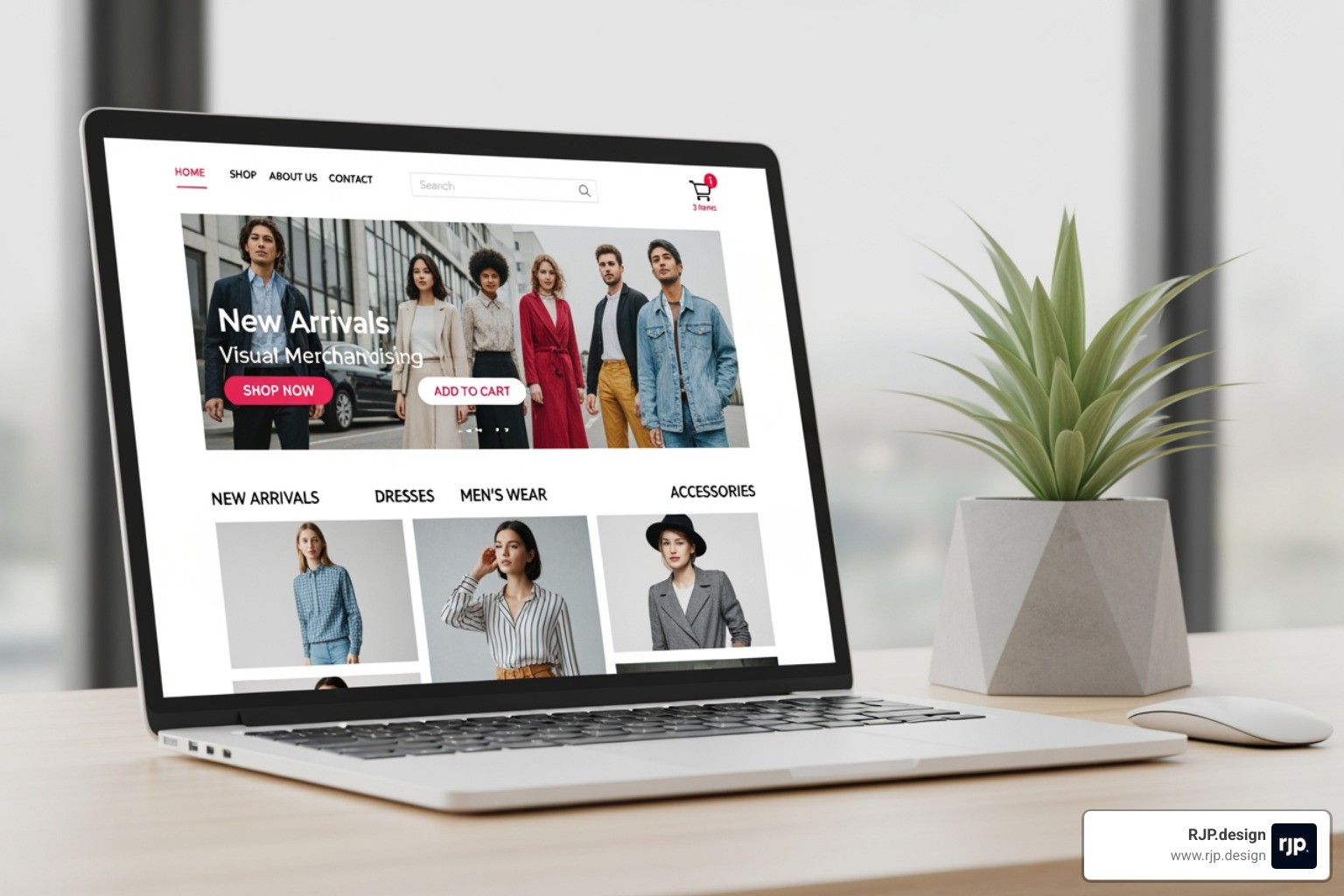
Building Trust and a Strong Brand Identity
In e-commerce, trust is currency. A professional, transparent design is the best way to earn it. Key components for building trust include:
Clear Trust Signals: Prominently display SSL certificates and payment provider logos (PayPal, Visa) to show customer data is safe.
Transparent Policies: Make your return, shipping, and privacy policies easy to find. Brands like Supergoop and Thesus use clear policies to reduce purchase anxiety.
Accessible Contact Info: Provide a clear "Contact Us" page and list contact details in your site's footer.
Consistent Branding: A consistent aesthetic across your site, like Satya Organic's earthy tones, builds familiarity and credibility.
Communicate Your Value: Your design should reflect what makes you unique. Allbirds, for instance, reinforces its eco-conscious mission through its site's language and certifications.
We believe that a strong, trustworthy online presence is the bedrock of any successful retail business. For assistance in creating a website that embodies professionalism and builds deep customer trust, consider our professional web design services.
Crafting an Intuitive User Experience (UX)
User experience (UX) is how easily customers can find products and complete a purchase. Poor navigation is a top reason for site abandonment, according to the Baymard Institute, making intuitive UX critical for sales.
Here's how to craft a great UX:
Simplified Navigation: Keep main menus concise (Shop, About, Contact). Place secondary links (FAQs, policies) in the footer to reduce clutter.
Prominent Search Bar: Shoppers using search are 3 times more likely to buy. Make your search bar visible on every page.
Smart Category Filters: Help customers narrow choices with filters for price, size, color, etc. Ministry of Supply does this well, improving the shopping experience.
Logical Site Structure: Organize products into clear categories and subcategories to create an easy-to-follow user journey.
Mobile-Optimized Experience: With limited screen space on mobile, prioritize key information, use touch-friendly navigation, and simplify forms. A smooth mobile experience is non-negotiable.
For expert guidance on optimizing your site's user experience, take a look at our insights on best ecommerce sites ux.
The Power of Visuals: Photography and Social Proof
High-quality visuals are non-negotiable, as good images can improve a website's conversion rate by 40%.
Best practices for product photography include:
Use High-Resolution Photos: Capture details with a good camera, like a newer smartphone or a professional mirrorless camera.
Use Simple Backgrounds: A white sweep or neutral background makes products stand out.
Show Multiple Angles: Provide various perspectives and a zoom function.
Include Lifestyle Images: Show products in context to help customers visualize using them, as seen on sites like Outdoor Voices.
Ensure Color Accuracy: Use tools like Photoshop Express to color calibrate and edit images.
Add Product Videos: Use short videos to demonstrate features or scale.
Beyond your own photos, leverage social proof to build trust:
Customer Reviews: Display reviews and testimonials on product pages. Verve Coffee Roasters integrates them throughout its site.
User-Generated Content (UGC): Feature customer photos, like Tessemae's does, to provide authentic endorsements.
Endorsements: Use expert endorsements or certifications, like Tiny Organics does with doctors, to build credibility.
Implementation, Optimization, and Growth
Once your retail website design is visually appealing and user-friendly, the next steps involve ensuring its technical robustness, optimizing the path to purchase, and integrating strategies for long-term growth. This is where your website truly becomes a powerful engine for your business. For comprehensive strategies on accelerating your online business, explore our guide on business growth online.
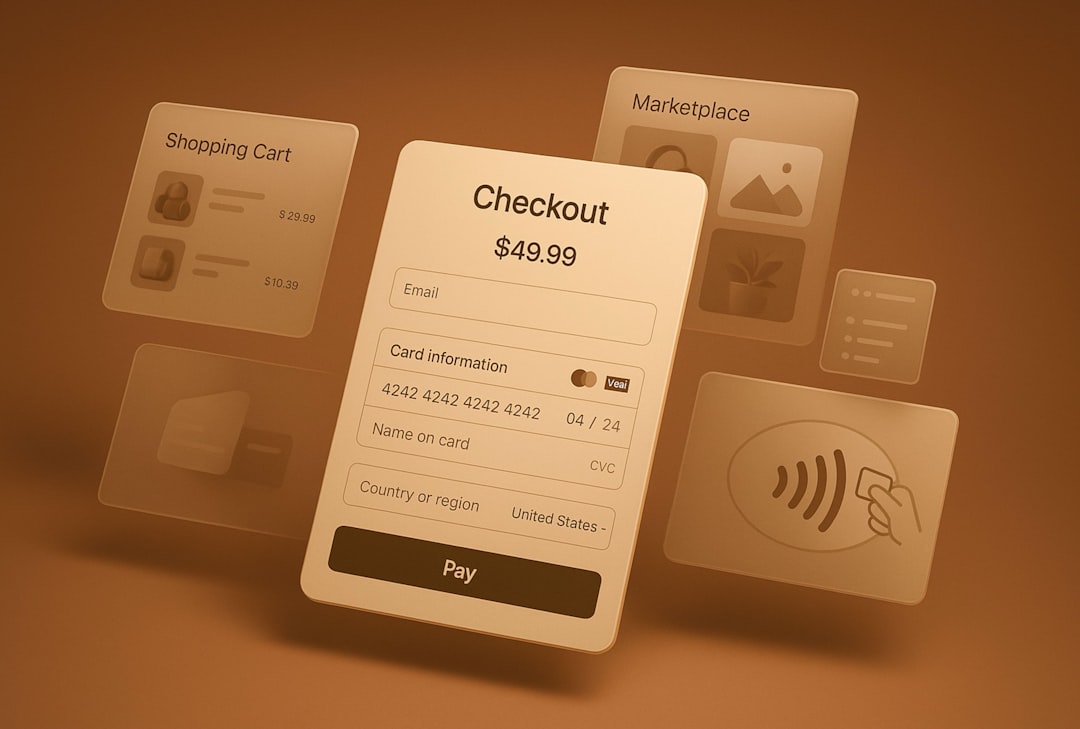
Technical Foundations for Your Retail Website Design
A great design needs a flawless technical foundation for a good user experience and search engine visibility.
Responsive Design: With half of e-commerce traffic coming from mobile, your site must adapt to all screen sizes. This is non-negotiable. We use techniques like media queries to ensure a seamless experience on any device. Learn more from our insights on responsive web design.
Mobile-First Indexing: Google primarily uses your site's mobile version for ranking, as per its mobile-first indexing guidelines. A mobile-first approach is essential for SEO.
Fast Page Speed: A slow site loses sales. Aim for a load time under two seconds. Achieve this by optimizing images, minifying code with asynchronous and deferred loading, using caching with plugins like WP Super Cache, and employing a CDN like Jetpack CDN.
Choosing the Right Platform: This is a key decision. For a full overview, see our ecommerce website development complete guide.
Optimizing the Path to Purchase
The checkout is where 69% of shoppers abandon their carts. Optimizing this process is crucial for converting sales. To reduce cart abandonment:
Offer Guest Checkout: Don't force account creation.
Use Clear CTAs: Make buttons like "Add to Cart" and "Place Order" stand out with contrasting colors and clear text.
Minimize Distractions: Remove extra navigation and pop-ups during checkout.
Show Progress: Use indicators (e.g., "Step 1 of 3") to reduce anxiety.
Simplify Forms: Auto-populate fields where possible.
Be Transparent: Display all costs, including shipping, upfront.
Provide Multiple Payment Options: Include credit cards, PayPal, Apple Pay, and "buy now, pay later" services.
These tactics are key to effective website conversion strategies.
Budget, SEO, and Support for Your Retail Website Design
Understanding costs, integrating SEO, and providing support are vital for long-term success.
Budgeting for Your Website: Costs can range from "$1,000 to over $10,000" for the initial build, with monthly platform fees from "$20 to $200." Platforms like Shopify offer hosted solutions, while open-source options like WordPress with WooCommerce provide flexibility. Choose a platform that balances cost, features, and scalability.
Content Marketing and SEO: Support your design with a strong SEO strategy. Create keyword-rich product descriptions and blog posts that address customer needs, and ensure your site has strong technical SEO. For a deep dive, see our guide on seo for e-commerce websites.
Customer Support and Accessibility: Build trust with excellent support and an inclusive design. Integrate tools like live chat and comprehensive FAQs. Ensure your site is accessible to everyone by using tools like the WebAIM color contrast checker and considering solutions like AccessiBe or UserWay. Finally, protect customer data with security features like Jetpack Security.
At RJP.design, we specialize in web design and web development services that steer these complexities. From design to ongoing optimization, we're here to help your retail website thrive. Get a quote for your web design and development project today.