
Marketing
Everything You Need to Know About Content Marketing Basics
Sep 3, 2026

Essential Formats and Strategic Buyer Journey Alignment
Understanding What is Content Marketing in the Modern Landscape
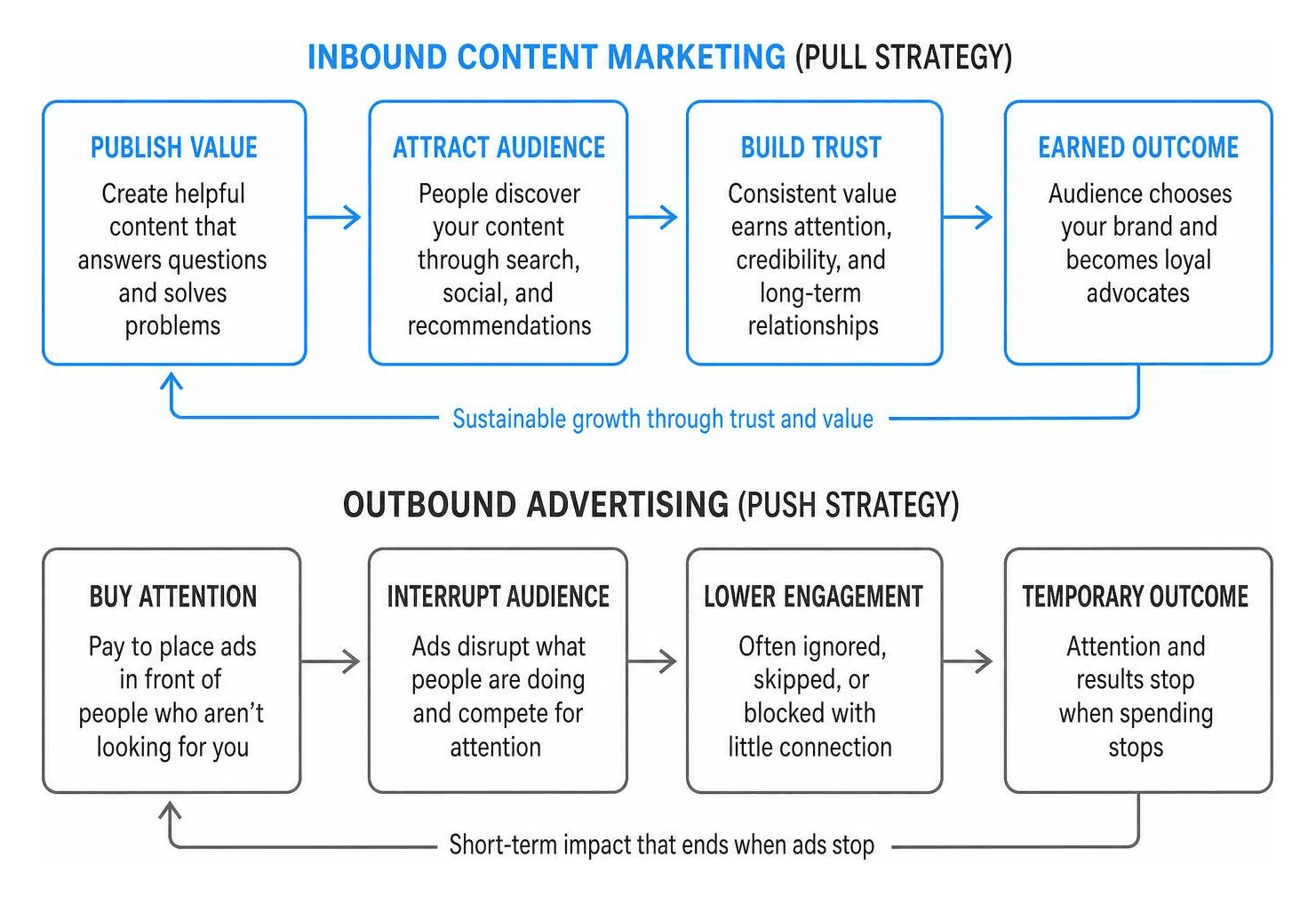
At its heart, answering what is content marketing comes down to understanding the shift from transactional advertising to value-driven communication. Rather than buying temporary attention through cold pitches, you publish high-quality digital assets that pull audiences toward your brand naturally. It is an educational exchange: you deliver genuine expertise upfront, and your audience rewards you with attention, trust, and long-term business.
This approach is not simply an internet-era fad. The history of content publishing stretches back over a century—from John Deere launching The Furrow magazine in 1895 to educate farmers, to the Michelin Guide offering automotive travel tips in 1900. While the channels have evolved into websites, video feeds, and search algorithms, the premise remains identical: solve problems first, sell second.
Today, understanding why content is king requires recognizing that modern consumers are research-driven. Over 76% of internet users actively research brands and products on social and search platforms before making a purchase. When you consistently answer their questions, you transform casual visitors into loyal brand advocates.
Core Benefits and Differences from Traditional Advertising
Traditional advertising operates on an interruption model. It inserts banners, commercials, and pop-ups in front of audiences who are trying to consume something else. Content marketing, conversely, acts as a magnet.
Feature | Content Marketing (Pull Strategy) | Traditional Advertising (Push Strategy) |
|---|---|---|
Audience Mindset | Actively seeking solutions and insights | Interrupted during other activities |
Asset Longevity | Compounds over time as an owned evergreen asset | Ceases generating traffic once ad spend stops |
Trust Building | High; establishes thought leadership and authority | Lower; viewed as self-serving promotion |
Cost Efficiency | Lower long-term customer acquisition cost (CAC) | Recurring media costs that scale with volume |
SEO Impact | Builds indexed pages, keywords, and organic backlinks | No direct organic search engine equity |
By integrating high-value content for digital marketing services, businesses earn sustainable organic visibility. Research shows that websites with active blogs gain 434% more indexed search pages, earn 97% more inbound links, and generate 67% more monthly leads than non-publishing competitors. Furthermore, keeping existing clients informed lowers churn—a critical factor considering a modest 5% boost in customer retention can increase overall profits by more than 25%.
What is Content Marketing Strategy Across the Buyer Journey?
An effective strategy maps specific content formats directly to the mindset of your audience as they move from curiosity to purchase and ongoing loyalty. Understanding how to create content strategy involves structuring your editorial roadmap across five distinct stages:
Awareness Stage (Top of Funnel): Prospects recognize a challenge or goal. They are searching for clear explanations, educational guides, and how-to articles rather than product pitches.
Consideration Stage (Middle of Funnel): Prospects evaluate different methods to solve their problem. Formats like comparison guides, expert webinars, and downloadable checklists prove which solutions work best.
Closing/Decision Stage (Bottom of Funnel): Buyers finalize their choice. Detailed case studies, live demos, customer testimonials, and clear pricing sheets remove friction and confirm credibility.
Loyalty Stage (Post-Purchase): Onboarding guides, user tutorials, and searchable knowledge bases ensure new customers achieve fast success with their purchase.
Advocacy Stage: Exclusive community forums, customer spotlights, and referral programs transform delighted users into active brand champions.
High-Impact Types of Content Marketing Formats
Modern audiences consume information across multiple touchpoints. Leveraging diverse formats allows you to reach buyers in their preferred mediums:
In-Depth Blog Articles: Educational long-form posts that capture high-intent search queries and demonstrate subject-matter authority.
Branded Video: Video remains exceptionally influential; 88% of consumers report being convinced to purchase a product or service after watching a brand's video, while 91% of businesses actively deploy it as a core marketing tool.
Podcasts: Audio formats offer intimate, screen-free engagement. With over 500 million global listeners, podcasts build sustained loyalty during daily commutes and workouts.
Infographics & Visual Guides: Visuals distill complex data into digestible takeaways. Studies indicate that visual content can boost reader comprehension and drive up to 650% higher engagement than text alone.
Interactive Calculators & Assessments: Interactive tools provide instant, personalized value while allowing you to understand user needs in real time.
Managing these assets across various teams requires structured content marketing asset management workflows alongside scalable content management systems to maintain publication consistency without operational burnout.
Building, Measuring, and Scaling Content Success

How SEO and AI Search Drive Content Discoverability
Creating exceptional content is only half the battle; it must be discoverable. Modern search engines evaluate content based on Google's E-E-A-T principles (Experience, Expertise, Authoritativeness, and Trustworthiness). Moreover, AI-driven search engines like ChatGPT, Google Gemini, and Perplexity synthesize answers directly from authoritative, well-structured sources.
To ensure your brand surfaces in these answers, combine comprehensive educational content frameworks with technical optimization. Review our seo content writing ultimate guide 2026 and execute systematic seo content creation that prioritizes search intent, straightforward answers, and structured markup.
Measuring Content Marketing ROI and Overcoming Execution Challenges
Many marketing teams struggle with tool fatigue and operational complexity. Recent surveys indicate that over 20% of marketers manage ten or more distinct responsibilities, losing up to 60 hours per year navigating disjointed software.
To maintain sustainable output and measure return on investment accurately, focus on core performance indicators:
Visibility & Traffic: Track organic sessions, keyword rankings, and indexed page expansion.
Engagement Quality: Monitor time on page, scroll depth, and social shares.
Lead Generation & Sales Funnels: Measure form completions, newsletter subscriptions, and assisted conversions.
Asset Lifecycle Management: Regularly examine your archives to determine why update old content to refresh declining traffic without producing new pieces from scratch.
Using a dedicated seo content optimizer streamlines on-page analysis, ensuring your team spends less time guessing and more time building relationships. At RJP.design, our down-to-earth team helps businesses design high-performing websites and execute end-to-end digital marketing strategies that turn organic content into sustainable revenue engines.