SEO
The A to Z of SEO: Understanding Search Engine Optimization
Mar 4, 2026

Introduction to Search Engine Optimization
What is SEO at its core? SEO stands for Search Engine Optimization – the practice of improving your website's visibility in organic (unpaid) search results. The primary goal is to rank higher on search engine results pages (SERPs) to drive qualified, organic traffic to your website.
Why does it matter? Organic search delivers a staggering 53% of all website traffic, making it the most cost-effective channel for sustainable business growth. With over 8.5 billion searches happening on Google every day, your potential customers are searching right now. SEO is about connecting with them at the exact moment they need you.
SEO differs from paid advertising like Pay-Per-Click (PPC), where you pay for every click. With SEO, you earn those clicks organically by building a valuable, authoritative online presence. Users tend to trust organic results more than paid ads, which builds credibility and establishes your brand as a leader in your industry.
For small business owners, SEO can feel overwhelming. This guide breaks down everything you need to know in practical, actionable terms.
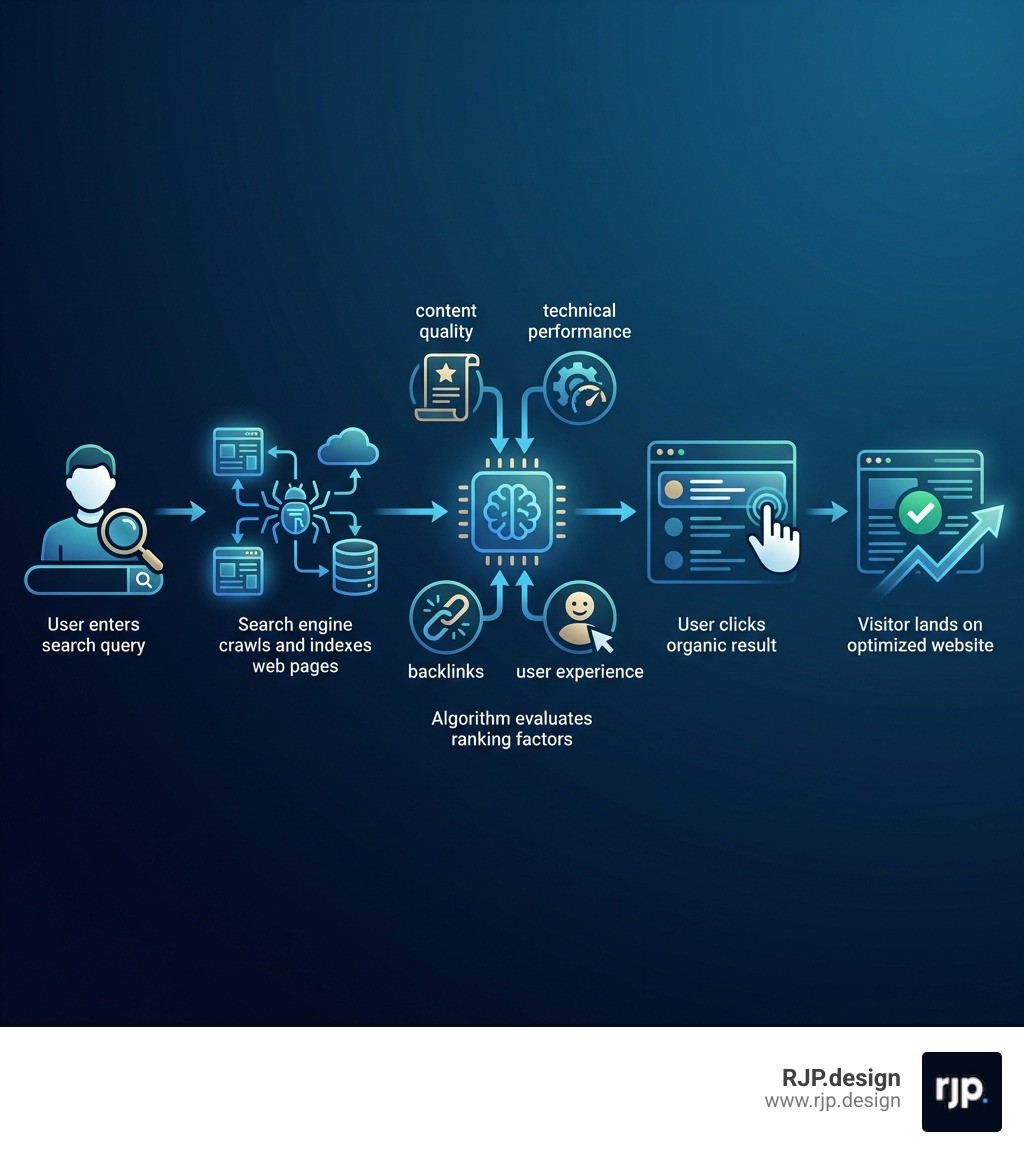
What is SEO terms explained:
How Search Engines Work
To optimize for search engines, you must first understand how they function. Think of them as digital librarians cataloging billions of webpages. The process involves four key stages:
Crawling: Search engines use automated programs called "spiders" or "crawlers" to find new and updated web pages by following links. This is why a crawlable site structure is essential.
Rendering: Modern websites use complex code (like JavaScript) that search engines must process or "render" to see the full content and layout, just as a user's browser would.
Indexing: After a page is crawled, its content is stored in a massive database called an index. If your page isn't in the index, it can't appear in search results.
Ranking: When you enter a search query, algorithms sift through the index to find the most relevant and high-quality pages. They evaluate hundreds of factors—from content and keywords to site speed and backlinks—to determine which pages rank highest.
The ultimate goal of a search engine is to understand user intent—what a person is truly looking for—and deliver the most useful results. Optimizing your site for this process is the key to being found by potential customers.
To dig deeper into the mechanics, we recommend exploring our How search engines work – RJP.design resource.
The Three Pillars of a Strong SEO Strategy
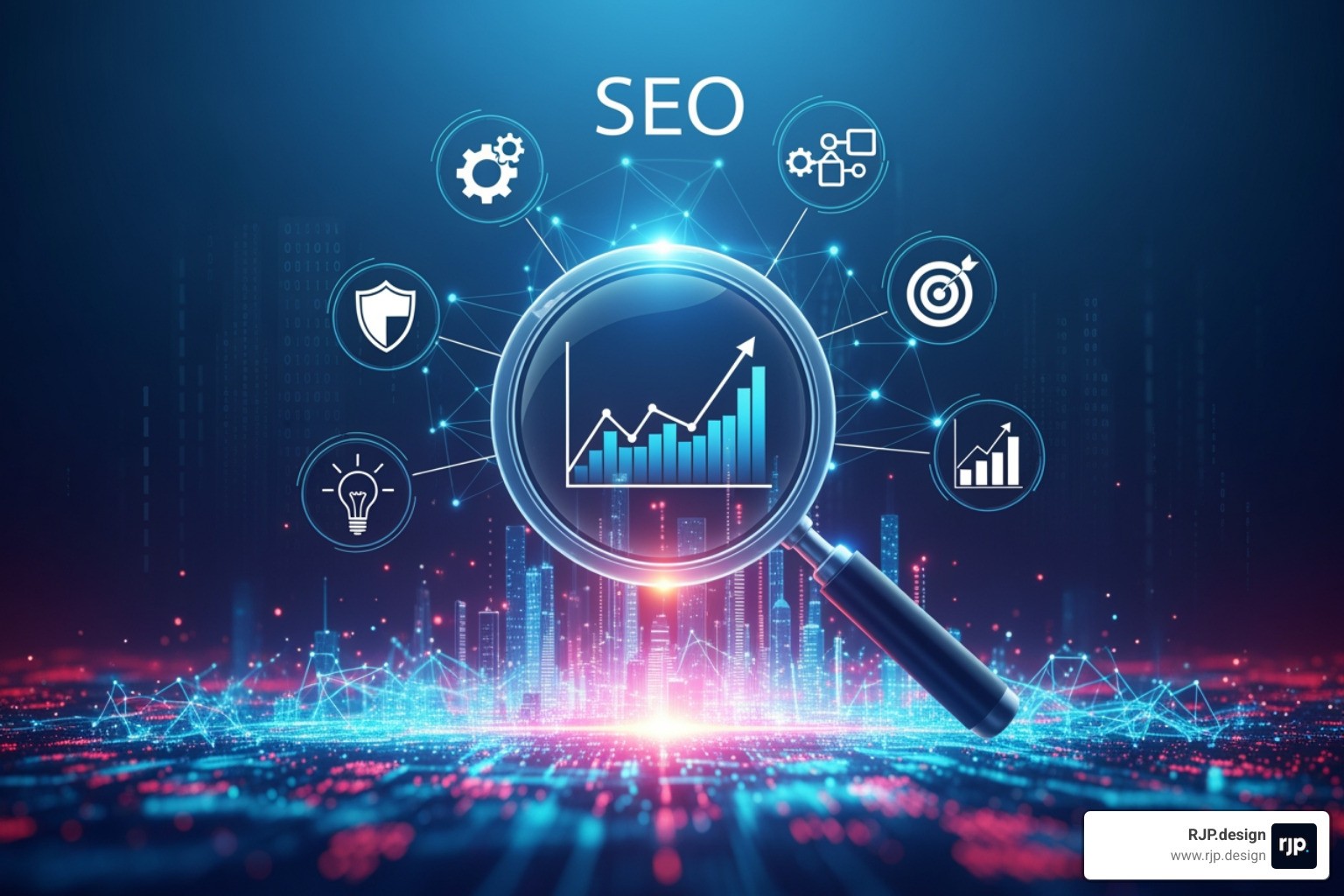
Building a successful SEO strategy is like constructing a sturdy building. It requires a strong foundation (Technical SEO), well-designed interiors (On-Page SEO), and a respected presence in the community (Off-Page SEO). Each pillar supports the others, creating a holistic approach that makes your website visible, valuable, and authoritative.
Pillar 1: Technical SEO
Technical SEO is the bedrock of your website, ensuring search engines can crawl, index, and understand your content efficiently. Without a solid technical foundation, even the best content may go unseen.
Key elements of technical SEO include:
Crawlability and Indexability: We ensure search engines can easily access and store your website's pages using tools like
robots.txtfiles and XML sitemaps.Site Speed and Core Web Vitals: A fast-loading site with a good user experience is crucial for rankings. Google's Core Web Vitals are key metrics we optimize for.
Mobile-Friendliness: With Google's mobile-first indexing, a responsive design that adapts to any screen size is non-negotiable.
Site Architecture: A logical website structure helps both users and search engines steer your content and understand its hierarchy.
Structured Data (Schema Markup): This code helps search engines understand your content's context, which can lead to rich search results like star ratings or product prices.
HTTPS: A secure website (using HTTPS) is a confirmed ranking factor that builds user trust.
We use tools like Google Search Console and Semrush to audit and resolve technical issues. For a deeper dive, check out RJP.design’s SEO Starter Guide and learn about Our SEO Optimization Services.
Pillar 2: On-Page and Content SEO
If technical SEO is the foundation, on-page SEO is the content and design that make your site appealing to visitors and search engines. The core principle is creating high-quality content that demonstrates E-E-A-T: Experience, Expertise, Authoritativeness, and Trustworthiness.
Key aspects of on-page and content SEO include:
Keyword Research: Identifying the specific phrases your target audience uses when searching for your products or services. Learn more in our SEO Keyword Research guide.
Optimized Content: Creating comprehensive, well-written content that naturally incorporates keywords to answer user questions thoroughly.
Title Tags and Meta Descriptions: The clickable headline and summary that appear in search results. A compelling meta description is vital for attracting clicks.
Header Tags (H1, H2, H3): These structure your content, making it easier for users and search engines to read and understand.
Image Alt Text: Descriptive text for images that improves accessibility and provides another opportunity for keyword inclusion.
Internal Linking: Strategically linking to relevant pages within your own website to guide users and help search engines find more of your content.
Find more strategies in our guide on More on SEO Content Optimization and learn about our SEO Meta Tags Guide.
Pillar 3: Off-Page SEO

Off-page SEO involves actions taken off your website to build its authority and reputation. It’s about how many other reputable sources recommend and trust your content.
Main off-page SEO activities include:
Link Building: Acquiring hyperlinks ("backlinks") from other reputable websites. These act as votes of confidence and are a major ranking factor. Learn more about Link Building Off Page SEO.
Digital PR and Brand Mentions: Earning features and mentions on news sites and industry blogs to build authority and gain valuable backlinks.
Social Media Signals: While not a direct ranking factor, an active social media presence increases content visibility and can lead to more natural links.
Online Reviews and Ratings: Positive reviews on platforms like Google Business Profile build trust and credibility, especially for local businesses.
Local Citations & Listings Management: For local businesses, ensuring your Name, Address, and Phone Number (NAP) are consistent across online directories is vital for local search rankings. See our Business Citations SEO guide and Google Business Profile Ultimate Guide.
A strong off-page strategy signals to search engines that your website is a respected authority in its field. Explore more techniques with Our Off-Page SEO Strategies.
What is SEO in the Modern Digital World?
The world of search is constantly evolving, and so is SEO. The modern digital landscape, shaped by AI, mobile devices, and shifting user behaviors, demands a dynamic and adaptive strategy.
The Future is Now: AI, Mobile, and Evolving Search
Recent game-changers have fundamentally reshaped how people search and how engines deliver results.
AI in Search & Generative Engine Optimization (GEO): With AI Overviews in Google and Bing's generative search results, a new field is emerging: Generative Engine Optimization (GEO). This focuses on creating clear, factual, and well-structured content that AI models can easily use in their answers.
Mobile-First Indexing: Google now primarily uses the mobile version of a site for ranking. A seamless mobile experience is non-negotiable, as the majority of searches now happen on mobile devices.
Changing Search Platforms: Search is diversifying. Many shoppers start on Amazon, while Gen Z often prefers TikTok. This means optimizing for platforms beyond just Google.
Voice Search: The rise of smart speakers and virtual assistants has made it important to optimize for longer, more conversational voice search queries.
These developments have led to specialized areas within SEO:
E-commerce SEO: Focuses on optimizing online stores, product pages, and categories. We cover this in our guide on SEO for E-commerce Websites.
Local SEO: Essential for brick-and-mortar businesses, this aims to rank in "near me" searches and local map packs. Our Local SEO Guide for 2025 and Local SEO Services provide comprehensive insights.
International SEO: For businesses targeting audiences in multiple countries or languages, this involves technical signals (like
hreflangtags) and content localization.
Your SEO Journey: DIY vs. Professional Help
A common question is, "Can I do SEO myself?" Yes, you can. You don't pay search engines for organic rankings, but effective SEO requires a significant investment of time and continuous learning.
Doing SEO Yourself: You can learn the basics and use free tools like Google Search Console to optimize blog posts or your Google Business Profile. However, the "cost" of DIY SEO is the time it takes away from running your business and the potential for missed opportunities.
When to Consider Professional Help: For many business owners, time is the biggest hurdle. Partnering with a dedicated SEO agency like RJP.design can be a game-changer. Here’s a quick comparison:
Feature | DIY SEO | Professional SEO Agency (like RJP.design) |
|---|---|---|
Cost | "Free" but high time investment | Paid service, saves internal time |
Expertise | Self-taught, basic to intermediate | Advanced, specialized, and always current |
Time | Very high commitment | Minimal commitment from your team |
Tools | Free or limited versions | Enterprise-level tools and data |
Strategy | Often reactive, trial-and-error | Proactive, data-driven, and holistic |
Results | Slower, less predictable | Faster, more consistent, with measurable ROI |
Our team at RJP.design specializes in creating customized SEO Digital Solutions that align with your business goals. Our down-to-earth team brings years of experience and advanced tools to the table, handling the complexities of SEO so you can focus on what you do best: running your business.
Ready to take your online presence to the next level? Explore our Digital Marketing solutions and see how we can help your business thrive.